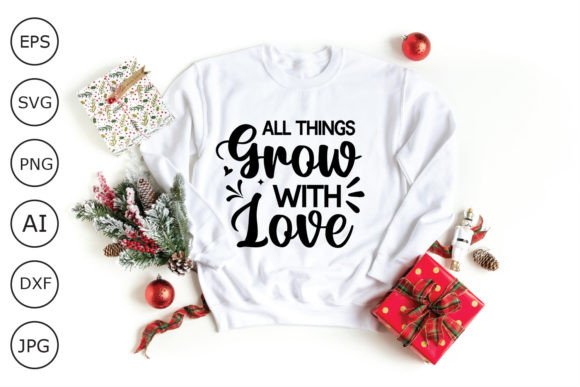
Reviewing All Things Grow with Love SVG for Embroidery
As a designer who has spent countless hours digitizing and stitching out thousands of files, I have learned that not every pretty graphic translates well to thread. When I first opened the All Things Grow with Love Svg, my initial reaction was one of cautious optimism. The phrase itself carries a warmth that resonates deeply with the gardening and plant-loving community, but as embroidery professionals, we know that sentiment alone does not make a stitchable design. We need clean lines, logical color breaks, and a layout that respects the limitations of the needle.
This review comes from the perspective of someone preparing a real-world project. I was tasked with creating a custom embroidered tote bag for a local botanical shop’s spring collection. The client wanted something that felt organic, welcoming, and slightly whimsical without looking cluttered. I pulled up this file from my library of Crafts and Graphics assets to see if it could handle the job. Here is my practical breakdown of how this design performs when moved from the screen to the fabric.
First Impressions and Visual Personality
The mood of All Things Grow with Love Svg is undeniably gentle. It avoids the harsh, blocky aesthetics often found in generic commercial fonts, opting instead for a layout that suggests growth and care. For an embroidery project, this is crucial. A design that feels too rigid can look stiff once stitched, especially on soft fabrics like cotton or linen. This particular design has a visual personality that leans into the handmade aesthetic, which is exactly what customers look for when buying a personalized gift or browsing an Etsy seller’s shop.
The inclusion of botanical elements, such as cactus or houseplant motifs, adds a layer of detail that needs careful handling. In digital form, these details might look crisp, but in embroidery, tiny leaves and thin stems can easily get lost if the stitch density is too high or the scale is too small. My first step was to inspect the vector paths. I looked for closed shapes that would translate well into fill stitches and open lines that might require satin stitch or running stitch treatment. The balance here seems promising, suggesting that the designer understood the medium.
Real-World Application: The Tote Bag Test
For my specific case study, I chose a heavy canvas tote bag. This is a popular item for small business merchandise and craft fair products because it offers a large, flat surface area. I placed the All Things Grow with Love Svg centrally on the front panel. The result was striking. The text remained legible, and the accompanying plant graphics provided enough visual weight to anchor the composition without overwhelming the fabric’s texture.
However, success on a tote bag does not guarantee success everywhere. If you are considering this for a sweatshirt embroidery project, you must consider the fabric’s pile. Fleece and terry cloth can swallow small details. I recommend testing the design on a scrap piece of your intended material first. For a baby embroidery project, such as a onesie or bib, the scale would need to be reduced significantly. In those instances, I would advise simplifying the design or removing the smallest decorative elements to ensure they do not become dense knots of thread that irritate sensitive skin.
Navigating Fabric and Hoop Constraints
One of the most critical aspects of using any machine embroidery design is understanding where it should not go. While All Things Grow with Love Svg is versatile, it has limitations. Curved surfaces, like caps or hats, present a challenge. The distortion inherent in stitching on a curved hoop can warp the text, making it difficult to read. If you are an apparel decorator working on headwear, I suggest placing this design on a flat patch rather than stitching directly onto the cap crown.
Similarly, textured fabrics and stretchy materials require extra attention. If you are stitching on a thin jersey knit for a t-shirt, the pull of the thread can cause puckering. Using the correct stabilizer is non-negotiable here. A cut-away stabilizer might be necessary for garments that will undergo frequent washing, while a tear-away might suffice for decorative items like pillow covers or wall hangings that see less wear and tear.
Commercial Viability and Brand Consistency
For Etsy sellers and creative entrepreneurs, the visual appeal of a design directly impacts buyer engagement. A clean, professional-looking finished product builds customer trust. When I stitched out this design, the clarity of the letters and the smoothness of the plant shapes contributed to a high-perceived value. It did not look like a rushed job; it looked intentional.
This matters for brand consistency. If your small shop specializes in rustic, earthy goods, this design fits seamlessly. It enhances the narrative of your brand without needing excessive explanation. However, if your brand is ultra-modern and minimalist, the whimsical nature of the plant elements might clash. Always consider whether the design assets align with your overall aesthetic before adding them to your digital embroidery file inventory.
Practical Designer Notes
Before you commit to a full production run, keep these technical checks in mind:
- Test on Scrap Fabric: Never stitch a new design directly on your final product. Use a similar fabric weight and type to check for puckering or thread breaks.
- Check Thread Color Contrast: This design relies on readability. Ensure your thread colors stand out against the fabric background. Dark threads on dark fabric will render the message invisible.
- Review Stitch Density: High density can cause stiffness and fabric distortion. If the design feels too heavy, consider adjusting the density settings in your software if the file allows for editing.
- Confirm Hoop Size: Ensure the design fits comfortably within your machine’s hoop size, leaving enough margin for clamping and stability.
- Inspect Small Details: Zoom in on the tiniest leaves or serifs in the text. If they are smaller than 2mm, they may not stitch out cleanly and could benefit from manual adjustment.
- Verify Licensing: Before selling finished items or using this in commercial embroidery projects, confirm the license terms. Some creators allow physical sales but restrict digital redistribution.
Final Verdict on Usability
The All Things Grow with Love Svg is a solid addition to any designer’s toolkit, particularly for those focusing on home decor, gardening gifts, and casual apparel. It performs best on stable, medium-to-heavy weight fabrics where the details can shine without distortion. While it requires thoughtful placement and proper stabilization, the end result is a charming, professional-looking piece that resonates with plant lovers and gift recipients alike.
Whether you are creating a holiday embroidery piece for a family member or stocking your boutique with unique tote bag designs, this graphic holds up under scrutiny. Just remember that the magic lies not just in the file itself, but in how you prepare your machine, select your threads, and choose your fabric. With the right approach, this design can elevate your handmade product line and bring a touch of natural warmth to your craft business.