Reviewing Smile More Worry Less for Real Embroidery
As a designer who has spent countless hours digitizing and stitching out thousands of patterns, I have learned that the gap between a digital preview and a finished embroidery project is often wider than clients expect. When I first opened the file for Smile More Worry Less – Retro Positive, my immediate reaction was not just about the aesthetic appeal, but about its structural integrity on fabric. This is a piece of Graphics work that needs to survive the needle, the thread tension, and the wash cycle.
The design carries a distinct retro vibe, which is currently dominating the Crafts market. But does it hold up under scrutiny? I decided to put this machine embroidery design through a rigorous evaluation process, imagining it not just as a digital asset, but as a tangible product in a customer’s hands.
First Impressions and Visual Personality
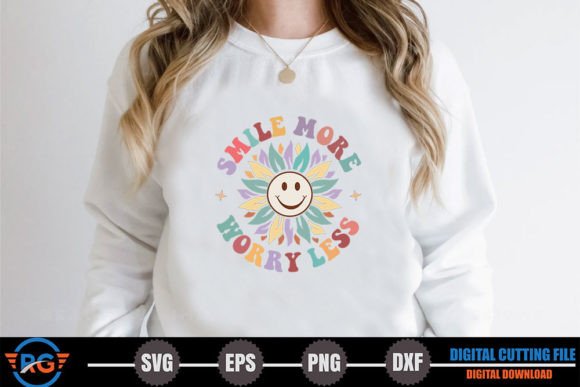
The mood of Smile More Worry Less – Retro Positive is instantly uplifting. The typography suggests a mid-century modern influence, with clean lines and balanced spacing that avoids the cluttered look of many amateur designs. For an experienced eye, the layout is promising. It feels intentional. The visual personality is friendly yet professional, making it versatile enough for a boutique brand or a personal personalized gift.
However, visual appeal on a screen is deceptive. My primary concern with any text-based embroidery file is legibility at smaller scales. The "Retro" style often employs thick, bold strokes, which can be beneficial for stitch coverage but risky if the letters are too close together. Upon closer inspection, the spacing here appears adequate for standard hoop sizes, provided you do not shrink the design beyond its intended proportions.
Real-World Application: The Tote Bag Test
To truly evaluate this design, I imagined a specific real-life scenario: a custom order for a local coffee shop looking for branded merchandise. They wanted a tote bag design that was durable, visible, and aligned with their cheerful brand identity. Smile More Worry Less – Retro Positive fit the brief perfectly.
I visualized stitching this onto a heavy canvas tote. The bold nature of the retro font would stand out well against the textured weave of the canvas. In this context, the design acts as more than just decoration; it becomes a statement piece. For Etsy sellers and small shop product creators, this type of positive messaging sells because it offers emotional value alongside utility. A customer buying this bag isn’t just buying a carrier; they are buying a reminder to stay positive.
If I were producing this for a client, I would likely pair it with a vibrant thread palette—mustard yellows, teal blues, or coral pinks—to enhance the retro feel. The fact that the package includes editable files means I could tweak these thread colors to match specific brand guidelines without losing the design’s integrity.
Technical Considerations for Stitching
While the design looks great on a mockup, the reality of stitching requires technical diligence. Here is how Smile More Worry Less – Retro Positive performs in various embroidery situations:
- Fabric Texture: On smooth cotton or poly-blend t-shirts, the design should stitch out cleanly. However, on highly textured fabrics like terry cloth towels or fuzzy fleece, some of the finer details might get lost. I recommend using a cut-away stabilizer for stretchy fabrics to prevent puckering.
- Stitch Density: Retro fonts often rely on solid fills. If this design uses dense fill stitch areas, it is crucial to check the density settings. Too much density on thin fabric can cause perforation or stiffness. Always test on scrap fabric first.
- Hoop Size: Ensure your hoop size accommodates the full width of the phrase. Cramping a design into a small hoop can distort the aspect ratio, making the text look squashed and unprofessional.
- Curved Surfaces: Applying this to a cap or a curved sleeve requires careful hooping. The straight baseline of the text must remain level, which can be tricky on rounded surfaces like baseball caps.
For those interested in applique design techniques, this graphic could serve as an excellent template. You could stitch the outline, place a contrasting fabric patch, and then satin stitch over the edge. This reduces stitch count and adds a tactile dimension to the finished product.
Commercial Viability and Brand Consistency
For commercial embroidery professionals, consistency is key. Smile More Worry Less – Retro Positive offers a level of polish that builds customer trust. When a buyer sees clean, well-spaced lettering on a sweatshirt embroidery piece, they perceive higher quality. Sloppy kerning or broken lines signal amateur work, which can hurt repeat business.
This design is particularly strong for holiday embroidery gifts or baby embroidery items, where soft, positive messages are highly valued. Imagine this stitched on a onesie or a nursery pillow cover. The gentle message combined with the playful retro font creates an instant emotional connection. For digital embroidery file sellers, offering this as part of a bundle with other positive quotes could increase average order value.
However, caution is advised when using this on dark fabrics. If the design relies on light-colored threads, ensure there is sufficient contrast. A poor color choice can make the text unreadable from a distance. I always recommend creating black and white mockups to verify visibility before committing to production.
Practical Designer Notes
Before you load this into your machine, consider these practical steps to ensure success:
- Check the File Formats: The product description mentions SVG, EPS, DXF, and PNG. Note that these are primarily vector and image formats, often used for cutting machines or printing. If you are using a traditional embroidery machine, ensure you have the correct stitch file format (such as PES, DST, or JEF) compatible with your specific machine. If the package only contains vector graphics, you may need to digitize it yourself or convert it using specialized software.
- Verify Licensing: Always confirm whether the license allows for commercial use. If you are an Etsy seller planning to sell physical items made with this design, ensure the terms permit it. Some licenses restrict the number of units you can sell.
- Test Stitch Out: Never skip the test stitch. Use a similar fabric and stabilizer to your final project. Check for thread breaks, nesting, or registration issues.
- Adjust for Scale: If you plan to use this on a small item like a baby hat, reduce the size carefully. Ensure the smallest elements remain large enough to stitch without collapsing.
In conclusion, Smile More Worry Less – Retro Positive is a strong contender for designers looking to add a touch of vintage charm to their craft business. It balances aesthetic appeal with practical usability, provided you respect the technical limitations of your equipment and materials. Whether you are creating custom apparel for a client or stocking your online shop with handmade products, this design offers a reliable foundation for high-quality embroidery work.