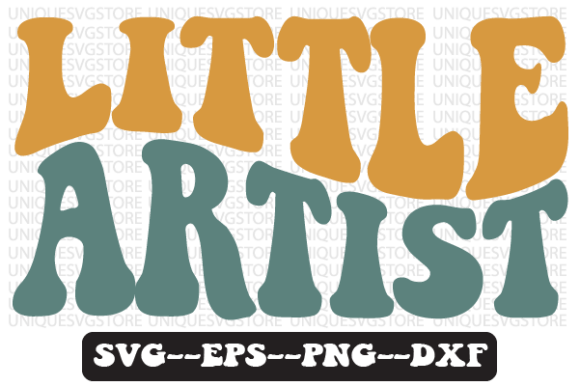
Reviewing the Little Artist Retro SVG PNG Design
As a designer who spends half my life staring at digitized files and the other half watching needles punch through fabric, I have learned that not every pretty graphic translates into a quality embroidery project. When I first pulled up the Little Artist Retro Svg Png Design, my initial reaction was one of cautious optimism. The retro aesthetic is currently dominating the Crafts market, but retro often implies complex gradients or distressed textures that can be a nightmare to stitch. However, looking at this specific asset within the broader category of Graphics, I saw potential for a clean, high-impact application if handled with the right technical approach.
First Impressions and Visual Personality
The mood of this design is playful yet nostalgic. It captures that specific mid-century charm that appeals to modern parents and boutique owners alike. The layout is balanced, with a clear focal point that does not rely on microscopic details. For an embroidery designer, this is crucial. Tiny, intricate lines in a digital file often turn into thread nests on the machine. This design, however, features bold shapes and distinct separations between elements. This suggests that it will hold up well as a satin stitch border or a solid fill stitch area without requiring excessive underlay or complicated jump stitches.
When evaluating any digital embroidery file, I look for "stitchability." Does the shape allow for natural thread direction? The Little Artist Retro Svg Png Design appears to have smooth curves and manageable corners. This is a good sign for maintaining the integrity of the design during the stitching process, especially when working with standard polyester or rayon threads that can break under too much tension.
Real-World Application: The Custom Sweatshirt Test
To truly understand the value of a design, you must imagine it on a physical product. I recently worked on a commission for a small shop owner who wanted to launch a line of custom kids' apparel. We needed a design that would look professional on a heavy cotton blend sweatshirt. This is where the Little Artist Retro Svg Png Design shined.
Because the design is described as a printable product suitable for sublimation and printing, I had to adapt my mindset. For embroidery, we are not printing; we are building texture. I visualized this design stitched onto the left chest of a toddler’s hoodie. The retro color palette suggested using muted mustard yellows, teal, and burnt orange. These colors provide excellent contrast against heather grey or navy fabric. The result would be a personalized gift that feels high-end rather than mass-produced. Customers react positively to designs that look intentional and clean, and this asset provides that foundation.
Versatility Across Product Lines
Beyond sweatshirts, this design has strong potential for various handmade products. Consider a canvas tote bag. A large-scale version of this graphic, stitched with a dense fill, could serve as a striking tote bag design for a local farmer's market or a boutique bookstore. Alternatively, scaling it down for a baby onesie requires careful attention to stitch density. You want the design to be soft against sensitive skin, so using a lighter fill or converting parts of it to a running stitch outline might be necessary.
For Etsy sellers and creative entrepreneurs, versatility is key to profitability. This design could easily be adapted for:
- Embroidered patches: Hoop it on twill, cut it out, and sell it as an iron-on accessory.
- Kitchen towels: A small, centered placement adds charm to holiday gifts.
- Caps and hats: Use a curved hoop and ensure the design width fits the front panel without distorting.
- Nursery decor: Stitched onto a pillow cover or wall hanging for a cohesive room theme.
Technical Considerations and Fabric Constraints
While the design is visually appealing, practical application requires diligence. Since the source material is listed as a printable SVG and PNG, it is not inherently an embroidery file like DST or PES. This means you, the designer, are responsible for the digitization process or ensuring your converter handles the shapes correctly. Do not assume the vector paths will translate perfectly to stitch paths without manual adjustment.
Pay close attention to hoop size. If you plan to stitch this on a curved surface like a cap, you must ensure the design fits within the usable area of your cap frame. Large, dense designs can cause puckering on stretchy fabrics. If you are using this on a t-shirt, a cut-away stabilizer is non-negotiable to prevent the fabric from pulling away from the stitches over time. For woven fabrics like aprons or tote bags, a tear-away stabilizer may suffice, but always test on scrap fabric first.
Another critical factor is thread color contrast. Retro designs often rely on subtle shifts in tone. In embroidery, you do not have the same gradient capability as printing. You must choose thread colors that distinguish each element clearly. Test your design in black and white mockups to ensure the shapes remain recognizable even without color. If the details blur together, you may need to simplify the design or increase the spacing between elements.
Commercial Viability and Brand Consistency
For those running a craft business, the professionalism of your finished product directly impacts customer trust. A sloppy stitch-out can damage your brand reputation. The Little Artist Retro Svg Png Design offers a clean aesthetic that, when stitched correctly, elevates the perceived value of the item. It signals to the buyer that care was taken in the creation process.
However, before selling any commercial embroidery items featuring this design, you must verify the licensing terms. The description mentions it is a printable product for items like T-shirts and hoodies, but commercial rights for digital resale or mass production can vary. Always confirm whether the license allows for unlimited physical sales or if there are restrictions. This due diligence protects your small shop from legal issues and ensures ethical business practices.
Final Designer Notes
Before committing to a full production run, follow these steps:
- Digitize or Convert Carefully: If you are converting the SVG to an embroidery format, manually adjust stitch angles to follow the contours of the design.
- Check Stitch Density: Ensure the fill is not too dense for lightweight fabrics to avoid perforation.
- Test on Actual Fabric: Stitch a sample on the exact material you plan to use for the final product.
- Inspect Small Details: Zoom in on the stitched sample to check for thread breaks or loose tails.
- Confirm Licensing: Read the terms provided with the design assets to ensure compliance for commercial use.
In conclusion, the Little Artist Retro Svg Png Design is a promising asset for designers who understand the translation from screen to stitch. It offers a trendy, retro vibe that resonates with current market demands. By applying proper technical judgment regarding stabilizers, thread choices, and fabric types, you can transform this graphic into a stunning finished product that delights customers and strengthens your brand. Whether you are creating a holiday embroidery gift or stocking your online store, this design deserves a spot in your toolkit, provided you respect the technical nuances of machine embroidery.