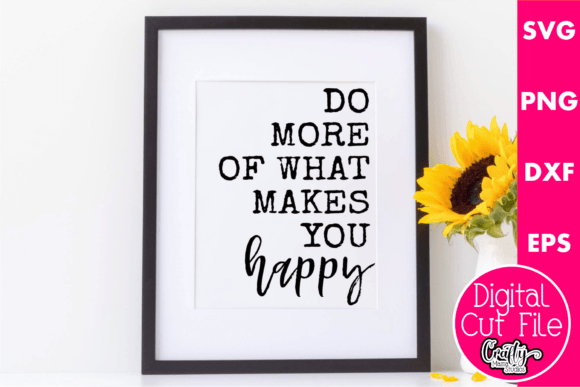
Stitching Joy: A Designer’s Review of Do More of What Makes You Happy
As an embroidery designer who has spent countless hours digitizing, testing, and critiquing files for real-world application, I approach every new machine embroidery design with a healthy dose of skepticism. We have all seen the flood of low-quality digital assets that look promising on a screen but turn into a tangled mess under the needle. However, when I loaded Do More of What Makes You Happy into my software, my initial reaction was one of cautious optimism. This isn’t just another generic quote; it is a piece of Graphics art that translates surprisingly well into thread.
The first impression of this design is its balance. The typography feels modern yet approachable, avoiding the overly ornate scripts that often cause stitching issues. For those of us in the Crafts industry, readability is king. If a customer cannot read the message from three feet away, the design has failed. This particular layout offers clean lines and sufficient spacing, which suggests it will hold up well even after multiple washes. The mood it creates is uplifting without being cloying, making it a versatile candidate for a wide range of projects.
Real-World Application: The Tote Bag Test
To truly evaluate an embroidery file, you must move beyond the digital preview. I decided to test Do More of What Makes You Happy on a heavy-duty canvas tote bag, a staple item for many Etsy sellers and small shop owners. Canvas presents specific challenges due to its weave and thickness. I selected a medium-weight tear-away stabilizer to support the fabric without adding unnecessary bulk.
The stitching process revealed the design’s strengths. The lettering utilized a combination of satin stitch for smaller elements and a clean fill stitch for larger characters. This hybrid approach is crucial for maintaining definition. On the textured surface of the tote, the design popped. The contrast between the bright white thread and the natural canvas created a crisp, professional look. It did not sink into the fabric, nor did it pucker excessively, indicating that the underlying digitization respected the material’s properties. For a handmade product intended for daily use, this durability is non-negotiable.
Versatility Across Product Lines
One of the most compelling aspects of this design is its adaptability. While it worked beautifully on the tote, I could easily envision it on a variety of other substrates. For custom apparel, such as a fleece-lined sweatshirt embroidery project, the design would serve as a central chest piece or a subtle sleeve accent. The positive messaging aligns perfectly with current trends in mental health awareness and self-care products.
For baby embroidery projects, scaling down the design requires caution. While the concept is sweet, the legibility of smaller text on stretchy knits can be tricky. I would recommend using a cut-away stabilizer for infant garments to prevent distortion over time. Similarly, for holiday embroidery gifts, this design fits seamlessly into New Year’s resolutions or back-to-school themes. It is not seasonally restricted, which increases its value for commercial embroidery businesses looking to maximize inventory turnover.
If you are creating an embroidered patch, this design’s clear boundaries make it an excellent candidate. Patches require dense stitching to ensure longevity, and the structure of Do More of What Makes You Happy supports this without becoming overly stiff. It also works well for home decor, such as pillow covers or kitchen towels, where a touch of inspiration adds warmth to the space.
Navigating Technical Constraints
Despite its strengths, no design is universal. There are scenarios where Do More of What Makes You Happy should be used carefully. First, consider the hoop size. If you are working with a small 4x4 inch hoop, you may need to resize the design significantly. When reducing text-based designs, the stitch density can become problematic. Thin lines may merge, and small details might get lost. Always check the minimum recommended size provided by the creator.
Textured fabrics, such as thick terry cloth or heavily ribbed knits, can obscure fine details. In these cases, increasing the thread colors contrast is essential. Using a dark thread on a dark fabric is a recipe for invisibility. Additionally, curved surfaces like caps require specialized digitizing techniques. While this file is likely designed for flat hooping, applying it to a cap may require additional stabilization and careful positioning to avoid distortion along the curve.
Dense stitch areas can also lead to fabric puckering, especially on thinner materials like silk or lightweight cotton. If you are stitching on delicate fabrics, consider using a water-soluble topping to keep the stitches on the surface and prevent them from sinking into the weave. Always test on scrap fabric first. This simple step saves time, thread, and frustration.
Commercial Viability and Brand Consistency
For craft business owners, the visual appeal of a design directly impacts perceived value. Do More of What Makes You Happy exudes professionalism. It does not look like a clip-art afterthought; it looks intentional. This level of quality builds customer trust. When buyers see clean, well-executed stitching, they are more likely to leave positive reviews and return for future purchases.
The design also aids in brand consistency. If your shop focuses on positivity, wellness, or modern minimalism, this asset fits seamlessly into your catalog. It allows for creative variations through thread colors. A pastel palette suits spring collections, while bold primaries work for back-to-school marketing. For digital product sellers, this file can be used in printable mockup creations to showcase how the design looks on different items, enhancing your listing images without needing to stitch every single variation.
Practical Notes for the Embroiderer
Before committing to a full production run, keep these practical tips in mind:
- Check File Formats: Ensure the download includes the specific format your machine requires. Common formats include PES, DST, and JEF. Verify compatibility before purchasing.
- Review Licensing: Understand the terms of use. Some files allow unlimited commercial use for physical products, while others restrict digital resale. Confirm whether you can sell finished items or if the license is for personal use only.
- Test Stitch Density: Run a test stitch-out on similar fabric to check for pulls or gaps. Adjust tension if necessary.
- Contrast is Key: Use high-contrast thread colors to ensure readability, especially on busy or dark backgrounds.
- Stabilizer Selection: Match the stabilizer to the fabric weight. Heavy fabrics need less support; light fabrics need more.
In conclusion, Do More of What Makes You Happy is a solid addition to any designer’s library. It balances aesthetic appeal with technical practicality, making it suitable for both hobbyists and professional small shop product lines. By understanding its limitations and leveraging its strengths, you can create personalized gift items and design assets that resonate with customers. Whether you are stitching a single tote bag design for a friend or producing a batch of finished product inventory for your online store, this design offers the reliability and charm needed to succeed in the competitive world of handmade goods.